🍂🎃 October Neurofeedback Special 🎃🍂 Click Here To Learn More
Many people assume attachment disorders or attachment wounds only affect children. In reality, the attachment patterns we develop early in life often follow us into adulthood, shaping our relationships, careers, self-esteem, and even how we respond to stress.
If you have ever wondered why you fear abandonment, push people away when they get too close, constantly seek reassurance, or feel emotionally overwhelmed in relationships, the answer may not be weakness or character flaws. It may be an attachment wound that developed long before you had the ability to understand what was happening.
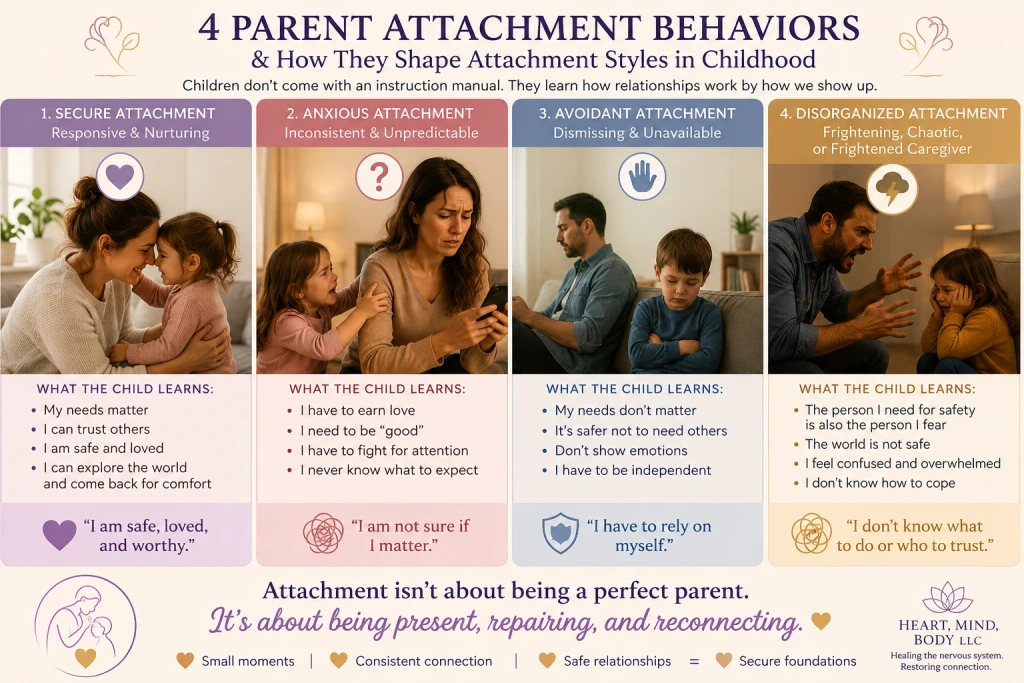
Attachment is the emotional bond that develops between a child and their primary caregivers. It is through these early relationships that we learn:
Am I safe?
Can I trust others?
Are my needs important?
Will people be there when I need them?
Am I worthy of love?
When caregivers consistently provide safety, comfort, and emotional attunement, children generally develop secure attachment.
When caregivers are inconsistent, emotionally unavailable, frightening, neglectful, critical, or abusive, attachment wounds can develop.
The child adapts to survive. The problem is that these survival strategies often remain active long after the danger is gone.
Children do not have the ability to leave unsafe environments. Instead, they adapt.
A child who is repeatedly ignored may learn:
“My needs don’t matter.”
A child who experiences unpredictable caregiving may learn:
“I have to stay hypervigilant so I don’t get abandoned.”
A child who is criticized may learn:
“I must be perfect to be loved.”
A child who experiences abuse from someone they depend upon may learn:
“The people who love me also hurt me.”
These beliefs are not conscious choices. They become embedded in the nervous system and often continue operating beneath awareness throughout adulthood.
Individuals with secure attachment generally:
Trust others
Communicate needs openly
Maintain healthy boundaries
Tolerate conflict without panic
Feel comfortable with intimacy and independence
Secure attachment does not mean perfect relationships. It means the ability to repair, recover, and reconnect after difficulties.
People with anxious attachment often:
Fear abandonment
Need frequent reassurance
Overanalyze interactions
Worry they are “too much”
Feel highly distressed when relationships feel uncertain
They may constantly scan for signs of rejection, even when none exist.
People with avoidant attachment often:
Value independence above all else
Feel uncomfortable relying on others
Withdraw during emotional conversations
Minimize their own needs
Feel trapped when relationships become too close
Underneath the appearance of self-sufficiency is often a deep fear of vulnerability.
Disorganized attachment frequently develops in environments where caregivers were both a source of comfort and fear.
Adults may:
Crave connection while fearing it
Alternate between pursuing and withdrawing
Experience emotional volatility
Struggle to trust others
Feel confused by their own relationship patterns
The nervous system receives conflicting messages:
“Come close.”
“Stay away.”
The result can be emotional chaos that feels impossible to understand.
Attachment wounds are not limited to romantic relationships.
They can appear in nearly every area of life.
Difficulty accepting feedback
Fear of making mistakes
Perfectionism
People-pleasing
Avoiding leadership roles
Fear of disappointing others
Difficulty trusting people
Fear of being excluded
Becoming overly dependent
Keeping everyone at arm’s length
Parents often discover their attachment wounds when their children trigger unresolved emotions.
A child needing comfort may activate feelings that were never comforted in the parent.
Attachment wounds often become most visible when intimacy increases.
Someone with anxious attachment may pursue.
Someone with avoidant attachment may withdraw.
Someone with disorganized attachment may do both.
These patterns can create relationship cycles that leave both people feeling misunderstood and exhausted.
Attachment is not simply a psychological issue.
It is also a nervous system issue.
When early relationships were unsafe, the nervous system learned to remain on guard.
As adults, relatively minor situations can trigger survival responses:
Fight
Flight
Freeze
Fawn
A delayed text message may trigger panic.
Constructive criticism may feel like rejection.
A disagreement may feel like abandonment.
The nervous system reacts as though the original wound is happening again.
Understanding this can replace shame with compassion.
You are not overreacting.
Your nervous system is reacting to old information.
The goal is not perfection.
The goal is creating enough safety within yourself that you can respond rather than react.
Start asking:
What happened?
What did I feel?
What story did I tell myself?
Awareness is the first step toward change.
When emotions rise, identify the experience:
“I am feeling abandoned.”
“I am feeling rejected.”
“I am feeling unsafe.”
Research shows that naming emotions helps calm the brain’s alarm system.
Before sending the text.
Before ending the relationship.
Before withdrawing.
Pause.
Try:
Slow breathing
Grounding exercises
Walking
Stretching
Holding a comforting object
Listening to calming music
A regulated nervous system makes better decisions.
Many attachment wounds carry shame.
Instead of criticizing yourself, try:
“Of course this feels difficult.”
“My nervous system learned this response for a reason.”
“I am safe now.”
Self-compassion creates the internal security many people never received externally.
Ask yourself:
Is this belief absolutely true?
Is there evidence against it?
Could there be another explanation?
Many attachment wounds operate through outdated conclusions that no longer reflect present reality.
Healing occurs in relationships.
Seek people who are:
Consistent
Respectful
Honest
Emotionally available
Able to repair conflict
Healthy relationships teach the nervous system that connection can be safe.
Attachment patterns are learned.
Anything learned can be relearned.
Your attachment style is not your identity.
It is a set of adaptations developed to help you survive circumstances that may have been painful, frightening, or confusing.
What protected you as a child may no longer be necessary as an adult.
Through awareness, self-regulation, healthy relationships, therapy, EMDR, trauma-focused treatment, mindfulness, and nervous system healing, new patterns can emerge.
The goal is not to erase your past.
The goal is to become aware of when the past is quietly influencing the present and gently bring yourself back to the reality of today.
Healing begins when we stop asking, “What’s wrong with me?” and start asking, “What happened to me, and how can I care for myself differently now?”
At that moment, attachment wounds stop being life sentences and become opportunities for growth, healing, and deeper connection—with ourselves and with others.
Heart, Mind, Body LLC
Healing the nervous system. Restoring connection. Creating lasting change.s

About the Author
Leigh Geffken, MSN, PMHNP-BC
June 25, 2026