🍂🎃 October Neurofeedback Special 🎃🍂 Click Here To Learn More
Pain changes people.
Trauma changes people.
Betrayal, neglect, loss, illness, rejection, disappointment, abuse, abandonment… these experiences leave fingerprints on the nervous system and scars on the heart.
When life wounds us deeply, something begins to happen internally.
We arrive at a crossroads.
Not all at once.
Not dramatically.
Usually quietly.
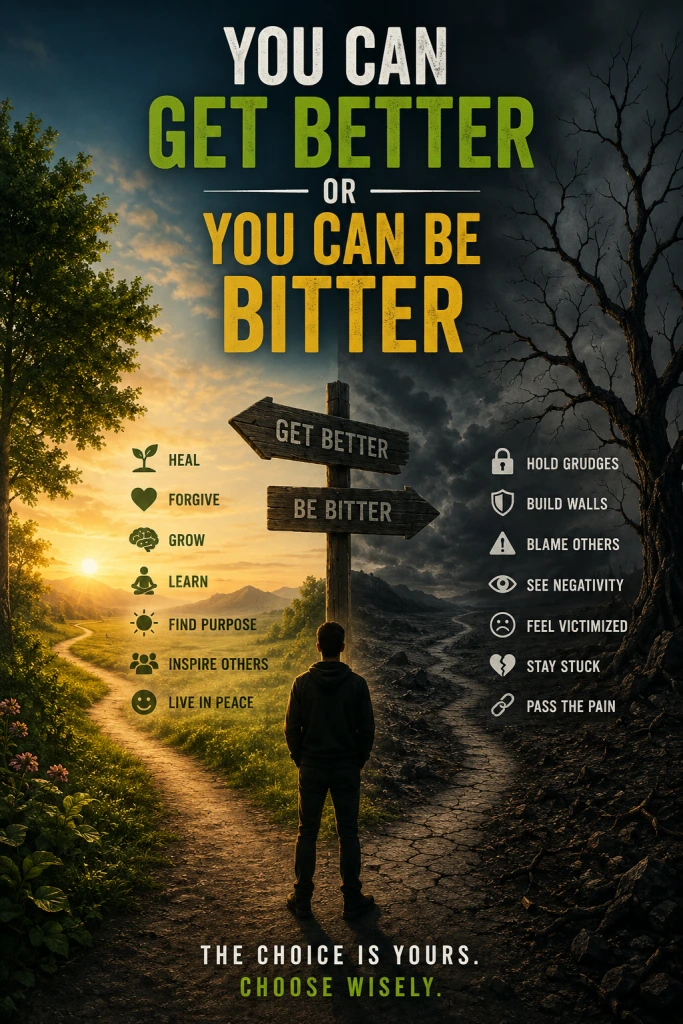
One path says:
“I will use this pain to become more conscious, more compassionate, more healed, more awake.”
The other path says:
“Because I was hurt, the world owes me something. Because I suffered, I will harden.”
One path leads toward healing.
The other toward bitterness.
And the difficult truth is this:
Bitterness often feels safer than healing.
Healing requires vulnerability.
Healing requires grieving.
Healing requires us to sit with the reality that what happened to us mattered — but does not have to define the rest of our lives.
Bitterness is easier in the short term.
It protects the ego from pain by building armor around the heart.
But over time, bitterness becomes its own prison.
You begin to see danger everywhere.
Love feels suspicious.
Kindness feels manipulative.
Joy feels naive.
You stop experiencing life directly and instead experience it through old wounds.
This is one of the hidden dynamics of unresolved trauma.
The nervous system starts expecting pain before pain arrives.
The brain begins scanning for betrayal, rejection, disrespect, or abandonment — even in safe moments.
Eventually, the original wound is no longer the only source of suffering.
The protection strategy becomes suffering too.
Healing does not mean pretending terrible things did not happen.
It does not mean toxic positivity.
It does not mean bypassing anger, grief, or reality.
Sometimes healing begins with rage.
Sometimes it begins with exhaustion.
Sometimes it begins when a person finally whispers:
“I do not want to carry this anymore.”
Getting better is not about becoming perfect.
It is about refusing to let pain turn you into someone disconnected from your own humanity.
Some of the kindest people you will ever meet have endured unimaginable storms.
Not because suffering automatically makes people wise — it does not.
But because somewhere along the way, they made a conscious decision:
“What happened to me will not become what I hand to others.”
That is strength.
That is emotional maturity.
That is healing.
The storm can either poison the soil…
or water the roots.
Both pain and healing are contagious.
So is bitterness.
The energy we carry spills into our relationships, our families, our workplaces, our parenting, our leadership, and the emotional climate around us.
A bitter person often believes they are protecting themselves.
But many times they are unknowingly recreating the very pain they once suffered.
Healing interrupts that cycle.
And perhaps that is one of the most courageous things a human being can do.
Not because healing is easy.
But because after everything life did to them…
they still chose not to become cruel.
You can get better.
Or you can become bitter.
The choice may not happen in a single moment.
It may happen a thousand times.
But every small act of self-awareness, accountability, softness, truth, courage, grief, forgiveness, boundary-setting, and growth moves you toward healing instead of hardening.
Your pain may explain you.
But it does not have to define you.

About the Author
Leigh Geffken, MSN, PMHNP-BC
May 29, 2026